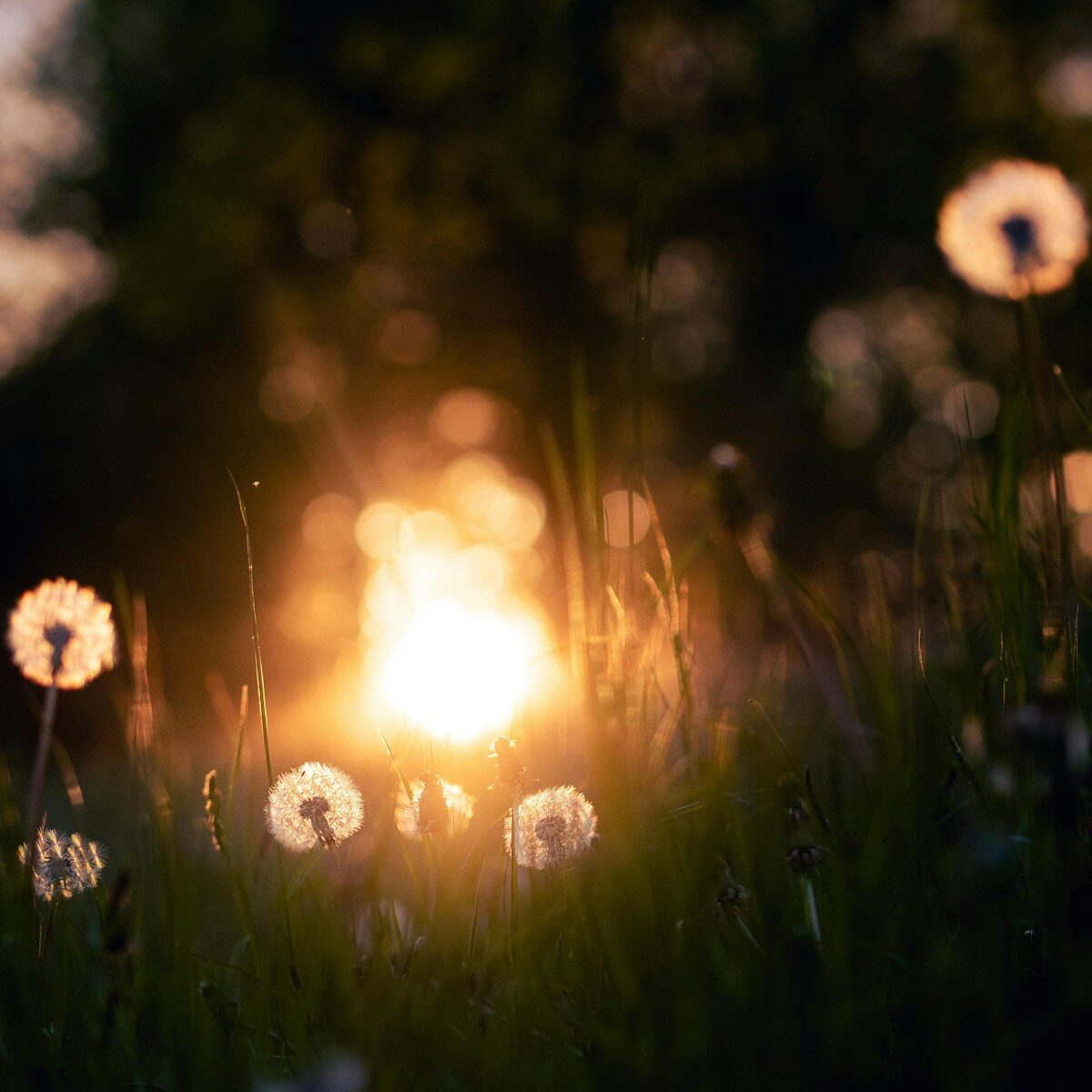
Around the twentieth or twenty-first of June, the sun reaches the very top of its arc. The day stretches long and golden, the night barely arrives before it gives way again to light, and the earth seems to hold its breath at the peak of the growing season. This is the summer solstice, and on the Wheel of the Year it is the sabbat known as Litha, or simply Midsummer.
If Yule, at the depth of winter, is the sabbat of the returning light, Litha is its mirror. It is the moment the light has been building toward all year. Everything is in full bloom, the days are at their most generous, and the world is alive with warmth and abundance.
A festival of fire and fullness
Litha belongs to the sun and to fire. Across countless cultures, people have marked this turning with flame: bonfires lit on hilltops, wheels of fire rolled down slopes, candles kept burning through the short night. Fire on this day is a way of honoring the sun at its strongest and lending our own energy to its power.
It is also a season of abundance and vitality. The fields are green, the gardens are heavy, and the long days invite us outdoors and into community. Midsummer has long been a time for feasting, for handfastings and weddings, for flower crowns and music and staying awake to greet the sunrise. The spirit of the sabbat is celebration. It asks us to step fully into the light and to give thanks for everything that has come to fruition.
A turning point, too
There is a quiet, bittersweet truth folded into Litha. The solstice is the longest day, which means it is also the moment the days begin to shorten again. From here the wheel turns slowly back toward the dark half of the year.
Many traditions hold this in the image of the Oak King and the Holly King, the two halves of the year in eternal exchange. The Oak King reigns through the waxing light until Midsummer, when the Holly King takes his place and the light begins its long return to rest. The lesson is gentle and very old: nothing holds at its peak forever, and there is grace in savoring fullness while it is here, knowing it will give way in its own time.
This makes Litha a beautiful moment to look at the intentions you set back in the dark of winter. What has grown? What has come into its fullness? The peak of the sun is a natural time to celebrate what has ripened and to pour your energy into carrying it the rest of the way.
When the veil grows thin
Midsummer has always carried a touch of enchantment. It is one of the times of year when the veil between our world and the realm of the fae is said to grow thin, which is why so much folklore, and a certain famous play, places its magic on Midsummer’s Eve. Herbs gathered at this time are believed to hold their greatest potency, and many practitioners spend the day harvesting and drying plants like St. John’s wort, mugwort, lavender, vervain, and chamomile for the year ahead.
Ways to honor the day
You can mark Litha simply or elaborately. Light a candle or, if you can do so safely, a small fire, and sit with the sun. Set stones and tools out in the midday light to soak up its strength, or make sun water by leaving a vessel out to be charged through the long afternoon. Solar stones like sunstone, citrine, carnelian, and amber resonate beautifully with the day. Gather and dry herbs while they are at their peak. Weave a crown of flowers, share a meal with people you love, or simply step outside at the height of the day and offer your gratitude for the light.
However you choose to mark it, may your Litha be bright, warm, and full.