There is a moment familiar to anyone who has spent real time in the backcountry. The light goes flat, the birds stop, and something shifts in the quality of the air. Nothing has happened. Nothing you could report. But your body has already decided that you are not alone out there.
Most of us talk ourselves out of that moment. Giano Cromley wrote a novel about the people who don’t.
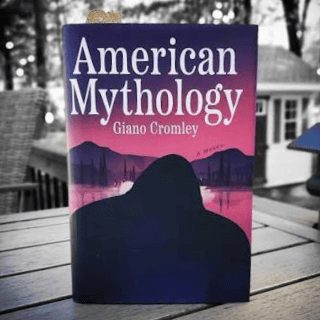
The book. American Mythology opens in a tavern in western Montana, where the Basic Bigfoot Society holds its monthly meeting. The Society has two members: Jute and Vergil, lifelong friends bound together by a shared conviction that the North American Wood Ape is real and findable. Their annual expedition into the backcountry is less a search than a ritual, the thing that keeps the friendship alive as their small town empties out around them.
Then the Society gets an offer. The country’s foremost Bigfoot expert wants to join the next expedition, bringing an ambitious young documentarian along. Vergil’s daughter Rye, home from college and thoroughly unconvinced, comes too, mostly to make sure her father isn’t humiliated on camera. Once they’re in the woods, things start happening that nobody in the group can explain away.
Cryptids as living mythology. Every culture has kept a creature at the edge of the map. The Sasquatch is not a modern invention; Indigenous peoples across the Pacific Northwest and beyond have carried stories of large forest beings for a very long time, with names, protocols, and meanings specific to each nation. What the twentieth century added was the camera, the plaster cast, and the argument.
What interests Cromley is not whether the creature exists. It’s what the search does to the searchers. Mythology, in the older sense, was never a set of factual claims. It was a way of holding a landscape in the mind so that the landscape stayed sacred. A forest with something unaccounted for in it is a forest you tread carefully in. That instinct is worth preserving whether or not anything is looking back.
The wild as sacred ground. This book makes a quiet argument for protecting wild places. Wonder requires habitat. It needs unmapped country, dark sky, and silence deep enough that a snapped branch means something. When we pave the places where mystery can live, we lose more than acreage.
A local homecoming. Cromley grew up in Billings. He took an MFA from the University of Montana before heading east, and he is a certified wildlife tracker, which shows in how the novel handles terrain, weather, and the small evidence of animals moving through. He teaches English in Chicago now, but the Montana in this book is not borrowed scenery. He knows the ground.
Ask us about it. Stop by the counter and we’ll point you toward the book, and toward the rest of the shelf it belongs to. We are always happy to talk about the things that live at the edge of the map.