The light is still long. The days are still hot. Nothing about the first week of August feels like an ending, and that is exactly the point. Lammas arrives while everything still looks like summer, and asks you to notice that the year has already turned.
It is the first of the three harvest festivals, the halfway mark between the summer solstice and the autumn equinox, and the oldest continuously observed grain holiday in the English-speaking world. It is also, quietly, one of the more demanding days on the wheel. Lammas does not ask for celebration alone. It asks for an accounting.
When it is observed
August 1 is the date most people keep. This is the fixed calendar observance, used by the majority of modern Pagan and Wiccan practitioners and listed on most interfaith calendars. Some traditions begin at sundown on July 31 and carry through August 1, following the older Celtic reckoning in which the day starts at nightfall.
The astronomical date falls a few days later. Lammas is a cross-quarter day, meaning the true midpoint between the solstice and the equinox, and that midpoint lands closer to August 6 or 7 depending on the year. Practitioners who prefer to follow the sun rather than the calendar observe it then. Neither is more correct. It depends on whether your practice is anchored to the sky or to the page.
In Ireland, the older observance was a season, not a day. Lughnasadh gatherings ran for weeks. Hilltop assemblies, fairs, and pilgrimages clustered through late July and into August, and many of the surviving customs attach to the last Sunday in July rather than to August 1 at all. Reek Sunday, the pilgrimage up Croagh Patrick in County Mayo, still draws thousands on that Sunday every year, and folklorists have long read it as a Christianized survival of a much older harvest pilgrimage.
South of the equator, the wheel turns the other way. August 1 in the Southern Hemisphere is Imbolc, the stirring of early spring. If you practice with people in Australia, New Zealand, or South America, they are lighting a very different kind of candle this week.
Where it comes from
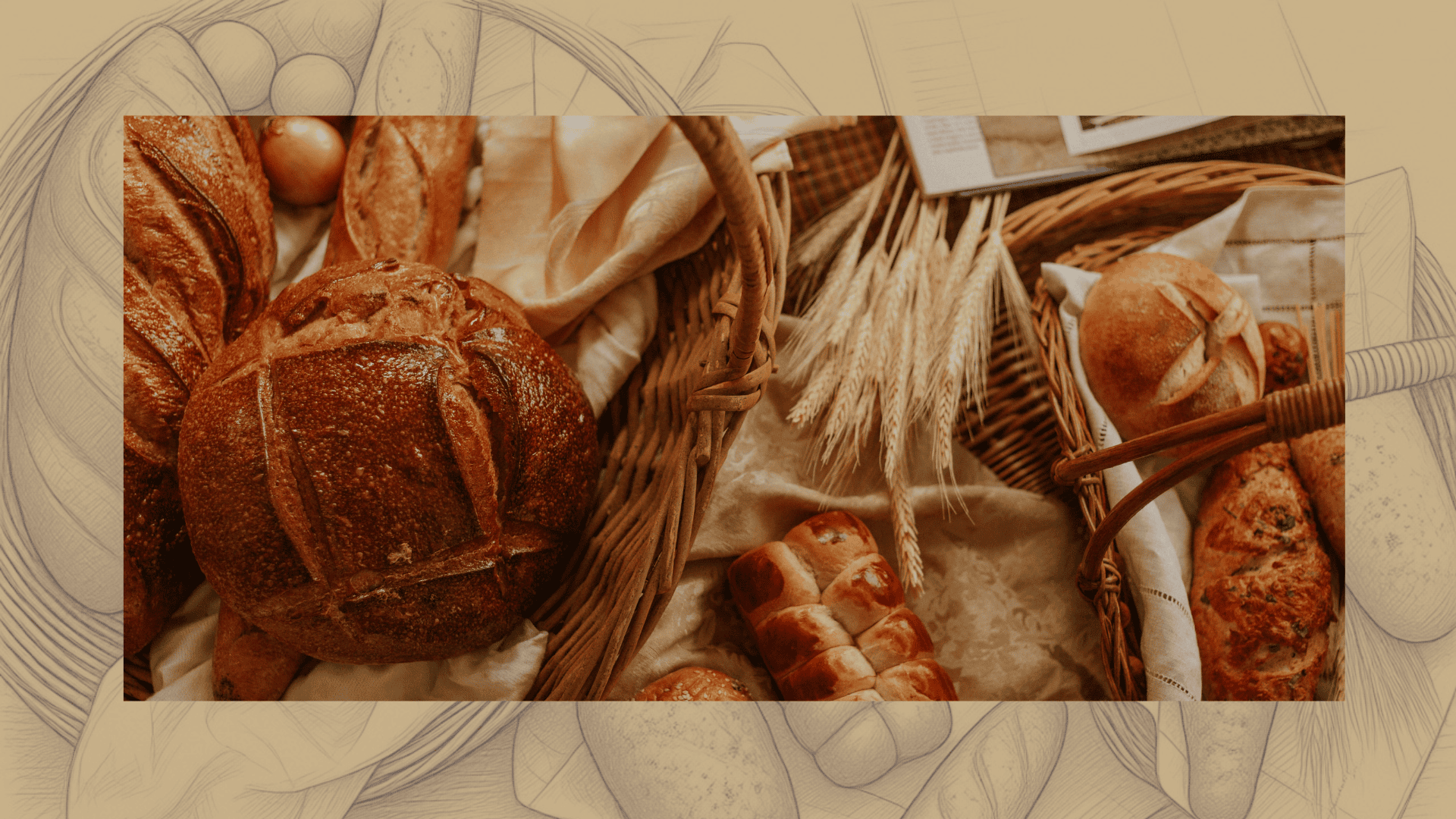
The English name is agricultural and Christian. Lammas comes from the Old English hlafmaesse, loaf mass. A loaf was baked from the first grain cut that season, carried to the church, and blessed. In some places that blessed loaf was then broken into pieces and set in the four corners of the barn to protect the stored harvest, which tells you something about how thin the line between liturgy and folk magic actually was.
The Irish name is older and stranger. Lughnasadh means the assembly of Lugh, and Lugh is one of the great figures of Irish myth, associated with skill, craft, and light. But the festival is not really his. He established it, according to the tradition, as funeral games in honor of his foster mother Tailtiu, who cleared the forested plains of Ireland so that grain could be planted, and who died of the exhaustion of that work. The games were held at Teltown in County Meath, and they involved athletic contests, horse racing, trading, legal proceedings, and matchmaking. Couples could enter into trial marriages at these gatherings, binding for a year and a day, dissolved by walking away from each other in opposite directions if it had not worked.
Both origins say the same thing in different registers. Something gave itself so that we could eat. The grain was cut. Tailtiu worked herself to death clearing the ground. There is no version of the harvest that does not involve a death, and the festival is honest about that in a way that our supermarkets are not.
The modern observance braids these together. When Lammas was gathered into the eight-fold Wheel of the Year in the mid-twentieth century, it brought both inheritances with it: the loaf and the funeral games, the blessing and the reckoning. The folk song about John Barleycorn, who is cut down, beaten, and buried, and who rises anyway, belongs to this same knot of ideas.
Ways to practice
Bake something from scratch. This is the oldest practice attached to the holiday and still the best one. Bread if you have the time, biscuits or scones if you do not. What matters is that you touch the grain and that the process takes longer than you would like. Eat some of it. Give some of it away. If you want the full traditional gesture, set aside a piece that nobody eats and leave it outside for the land.
Take honest inventory. Sit down and write three lists. What has actually ripened since spring, meaning the things that came in, finished, worked. What is still green and needs more time. And what you planted in good faith that is not going to come in this year. The third list is the hard one and the whole reason the holiday exists. Naming a thing as unfinished is not the same as calling it a failure, and Lammas is the traditional moment to say it out loud and stop spending on it.
Buy from someone who grew it. The Billings farmers markets are at their peak right now, and the most direct way to observe a first fruits festival is to put money in the hand of a person who put the seed in the ground. Ask what came in well this year and what did not. You will get a version of the same inventory you just wrote for yourself.
Build a small altar. Wheat or dried grasses, sunflowers, berries, garden herbs, a piece of bread, and candles in gold, orange, or deep yellow. Corn dollies woven from grain stalks are the traditional figure for this season, and instructions for the simplest braided shapes are easy to find. Carnelian and citrine are the stones most often paired with this point in the wheel, if you like working with stone.
Compete at something. This one gets skipped and it should not. Lughnasadh was games. Play cards with somebody, run a race, enter something at the fair, argue vigorously about a topic that does not matter. Tailtiu’s memorial was not a solemn occasion. It was a field full of people trying to beat each other at things.
Say a name. If you know who fed you, meaning the actual people, the grandmother with the garden or the person who taught you to cook, say the name over the bread. The whole holiday is an argument that food arrives through somebody’s labor and that the labor deserves acknowledgment.
We keep candles, incense, journals, stones, and a shelf of books on seasonal practice at the shop, and we are happy to help you find what fits the way you actually work. Come by 223 N. 29th Street, or call us at 406-252-4398.
The tilt has already happened. The days are getting shorter and have been for six weeks. Cut what is ready, name what is not, and eat the bread while it is warm.