In our last piece, we walked through how to cleanse a space — clearing it of stagnant energy, residue from difficult moments, and the accumulated weight of ordinary life. That work matters. It also isn’t enough on its own.
There’s an old idea, echoed across many traditions, that energy moves the way water does — it fills whatever space is available. Clear out a room and you don’t get a permanent emptiness. You get a vacuum. Whatever happens to be passing through next will rush in to fill it.
That’s why cleansing is only half of the practice. The other half is consciously deciding what you want your space to hold.
Begin by naming what you want
Before you light a candle, sit somewhere quiet in the cleansed room and ask: what do I want to grow here?
The answer might be simple. Rest. A place where my family laughs more. A bedroom that feels safe. A kitchen where people gather. A workspace that draws in clients.
Name it specifically. Write it down. Speak it aloud. Vague intentions produce vague results. I want this room to feel good is a start, but I want this room to be a place where I can rest deeply and dream well gives the work somewhere to land.
What follows are three of the most common intentions, and the practices that traditionally support them.
For abundance
Abundance is more than money, though it certainly includes it. It’s the felt sense that there is enough. Spaces that hold abundance feel generous. They invite people in.
Citrine, pyrite, and green aventurine are the classic abundance stones — placed in the wealth corner of your home (far left from the front door, in some Feng Shui traditions) or near where you do work that earns. Bay leaves tucked into cupboards or burned with a written wish. Cinnamon sprinkled at the front door and swept inward invites prosperity in. A bowl of fresh fruit in the kitchen reminds the eye, and the subconscious, of plenty. Green candles dressed with abundance oils and burned during a quiet moment of intention setting.
The deeper practice underneath: abundance grows in spaces where what is already present is appreciated and cared for.
For safety and protection
After a difficult chapter, many people want their space to feel safe again before anything else. This is wise. Safety is the foundation everything else rests on. Traditional protections cluster around the edges — doorways, windows, thresholds.
Black tourmaline, obsidian, and hematite at the four corners of a room or by the front door. Salt at thresholds and in small bowls in corners. Juniper, rosemary, and rue hung in a small bundle behind the front door, or tucked into a sachet under the pillow. A blessed object at the threshold — a horseshoe, an evil eye, a saint’s medal, a hagstone — depending on your tradition.
Pair the energetic work with the practical. Working locks, good lighting, neighbors who know your name — these are protections too. The work is most powerful when it isn’t asked to do alone what the material world should also be doing.
For healing
Healing spaces are quieter than abundance spaces. They are soft, low-stimulus, generous with rest.
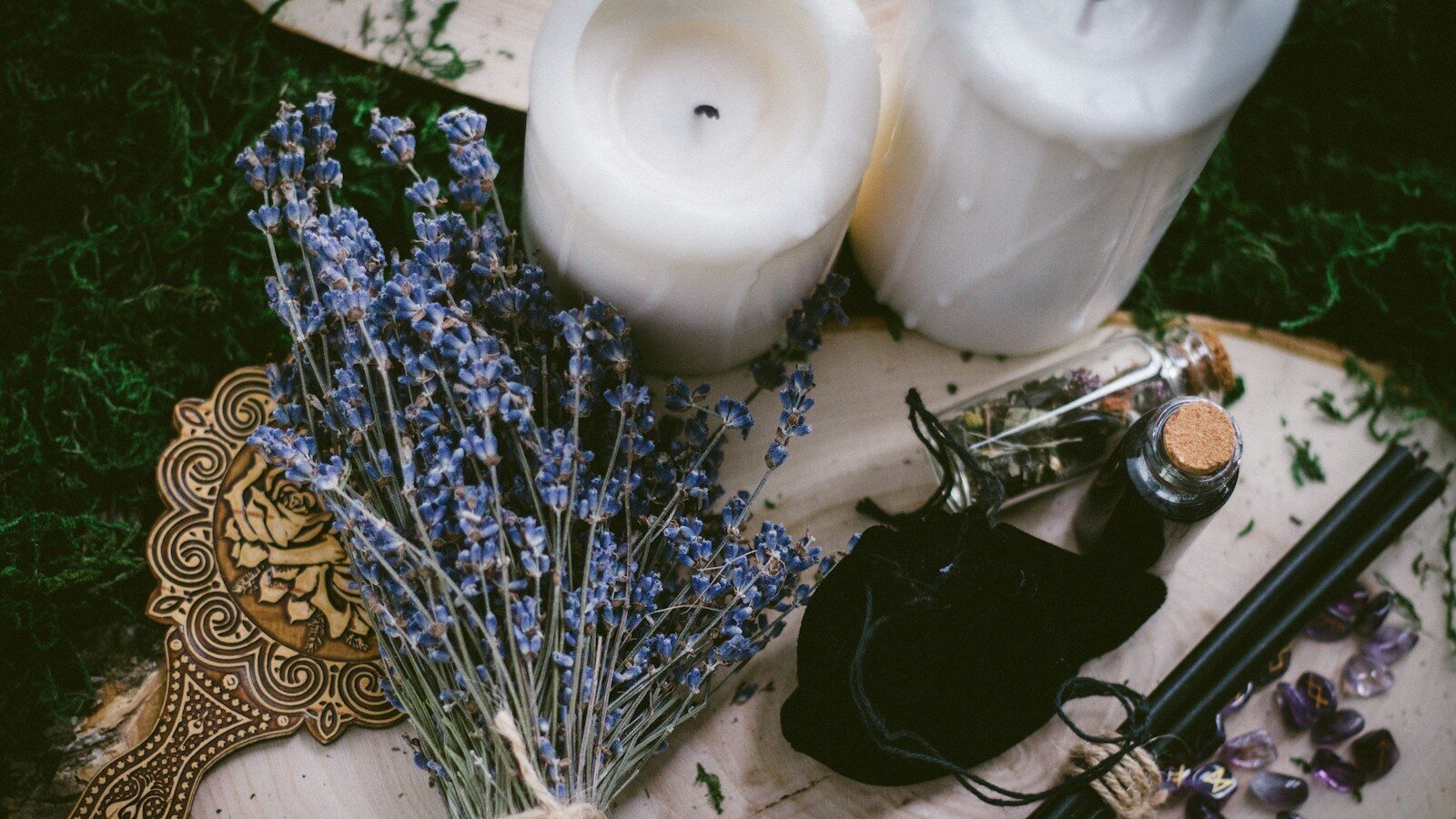
Rose quartz near where you sleep, amethyst near where you rest, clear quartz wherever clarity is needed. Lavender, chamomile, and eucalyptus in the air — through a diffuser, a sachet under the pillow, or fresh sprigs in a vase. Soft light: dimmer lamps, candles, salt lamps. Overhead lighting is rarely a friend to healing. Texture: blankets, cushions, things that comfort the body.
The deepest healing practice in any space is this: making it a place where someone is allowed to rest without performing recovery.
Anchors and altars
Whatever intention you are working with, give it a physical home. An altar doesn’t have to be elaborate or religious. A single shelf, a corner of a bookcase, a small tray on the windowsill. Place on it what represents what you are calling in: a stone, a candle, a fresh flower, a written intention folded small. Tend it. The altar becomes a quiet reminder to the space, and to you, of what this room is for.
The spaces we live in are not passive. They respond to attention. Tend yours, and it will tend you back.